
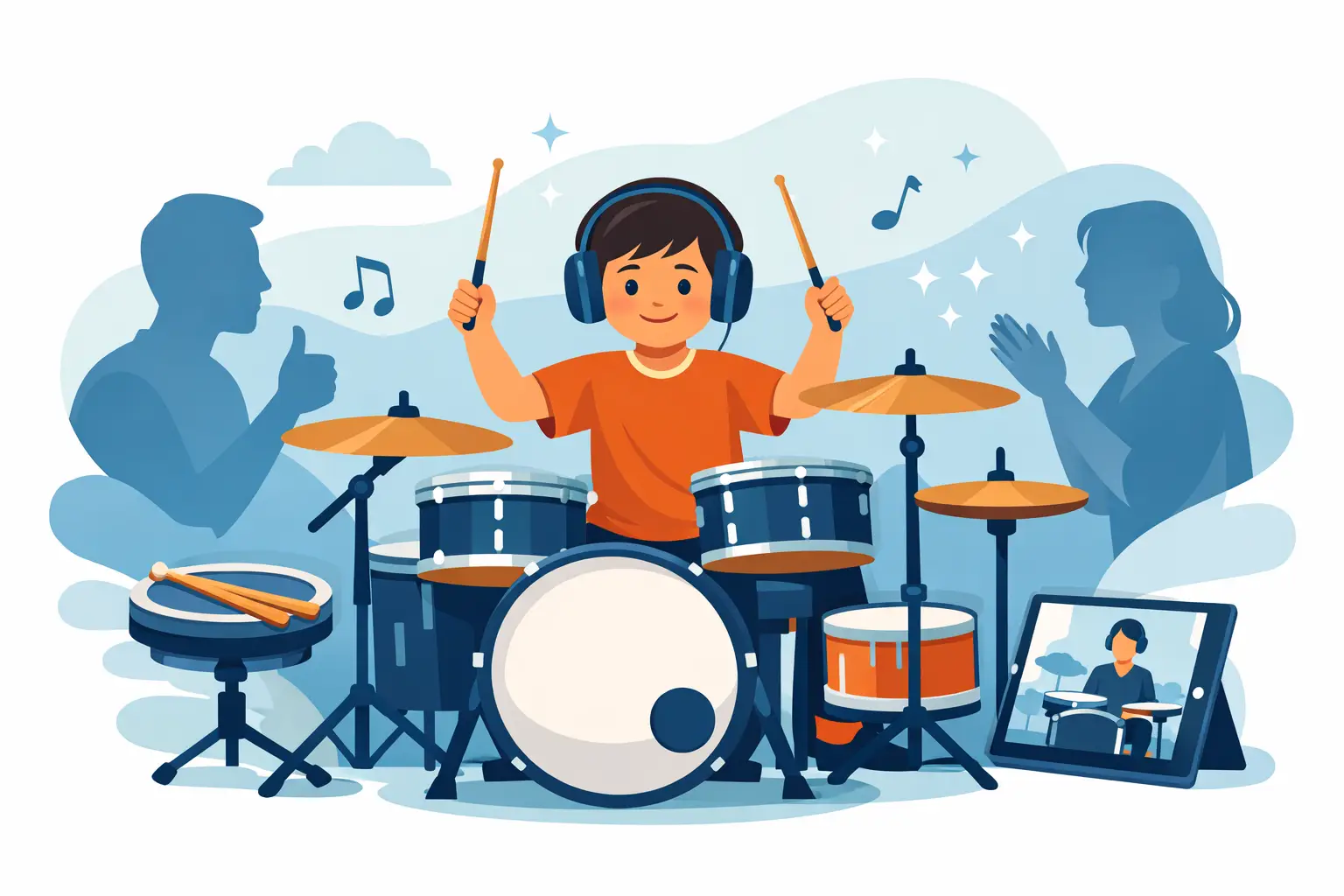
That first moment matters more than most parents expect. A child sits at a drum set, taps the snare, hits a cymbal a little too hard, and suddenly you can see it - the grin, the curiosity, the energy. When families ask how kids start drumming, they usually want to know the practical stuff: the right age, the right drum set, and whether lessons are worth it. But the bigger question is how to help a child begin in a way that feels fun, encouraging, and sustainable.
For most kids, drumming starts best when the experience is structured enough to build real progress and relaxed enough to keep their excitement alive. That balance makes a huge difference. If the first steps feel too strict, kids can lose interest. If there is no direction at all, they can get stuck fast.
How kids start drumming at different ages
Kids do not all begin the same way, and that is completely normal. Some are ready at five or six to follow simple patterns, keep a steady pulse, and learn basic stick control. Others connect more naturally around seven, eight, or nine, when attention span, coordination, and listening skills are a little more developed.
Age matters, but readiness matters more. A child who loves moving to music, imitates rhythms on the table, or lights up around instruments may be ready sooner than expected. On the other hand, a child who is interested but not yet ready for a full drum set can still start with rhythm games, hand percussion, and simple exercises that build a strong foundation.
This is one reason personalized instruction helps so much. The best early drum experience matches the student, not a rigid timeline. Some kids want to play beats right away. Others need a little more time getting comfortable with posture, grip, and coordination. Both paths can work beautifully.
The first goal is not perfection
Parents sometimes assume beginner drumming should look tidy right away. In reality, the early stage can be noisy, uneven, and full of trial and error. That is not a problem. It is part of learning.
The first goal is usually confidence. Can your child sit down, hold the sticks correctly enough to play, and create a simple beat they recognize? Can they listen, respond, and enjoy the process? Those wins matter because they create momentum.
Technique is still important, of course. Good habits in grip, timing, and body position help prevent frustration later. But young beginners tend to stay engaged when they can feel musical success early. Playing a basic rock beat, matching a rhythm, or learning a favorite song fragment often does more for motivation than a long lecture on mechanics.
What kids need to begin drumming
A child does not need a professional-level setup to get started. They need an instrument that fits their size, sticks that feel manageable, and guidance that keeps things simple.
For some families, a practice pad is the first smart step. It is quieter, more affordable, and great for learning stick control and basic rhythms. For others, an electronic drum kit makes sense because it offers volume control and a more complete playing experience. Acoustic kits are exciting and authentic, but they are louder and need more space, so they are not the right fit for every home.
There is no one perfect choice. It depends on your child's interest level, your budget, and how much room you have. A student who is still exploring may do great starting in lessons before you invest in a full setup. A child who is clearly all in may benefit from having something at home right away to reinforce what they learn each week.
How lessons help kids start drumming faster
A lot of children can bang on drums. Learning to actually play them is different. That is where lessons change everything.
Good drum lessons give kids a path. Instead of randomly hitting pieces of the kit, they learn how beats are built, how timing works, and how each small skill connects to real music. They also get accountability, which matters more than most people realize. Kids often practice more consistently when they know a teacher is cheering them on and helping them improve.
Just as important, lessons remove a lot of early frustration. Beginners often struggle with doing two or three things at once - right hand, left hand, foot, counting, and listening. A strong teacher breaks that challenge into manageable pieces, so the student feels progress instead of overload.
For younger students especially, personality fit matters. The best teacher is not just knowledgeable. They are patient, upbeat, and able to turn the lesson into a win. When a child feels safe to make mistakes, they usually learn faster.
What a beginner drum lesson should feel like
The best first lessons are active, encouraging, and clear. A student should leave feeling, "I can do this."
That often means starting with very simple patterns, basic stick grip, and listening exercises. It may include playing along with a song, learning how to count a beat, or practicing short rhythm phrases. The lesson should have structure, but it should also feel enjoyable. Kids stay engaged when they can hear and feel their own improvement.
A strong beginner program also grows with the student. Once the basics are in place, children can move into fills, dynamics, reading rhythmic notation, playing with a backing track, and eventually performing with other musicians. That journey is exciting because drumming is not just a solo activity. It is one of the fastest ways for kids to feel part of a band.
Practice at home without the battles
Home practice helps, but it does not need to become a daily struggle. For beginners, shorter sessions usually work better than long ones. Ten focused minutes can do more than thirty distracted minutes.
Parents do not need to become drum teachers at home. In fact, it often goes better when your role is simple: provide the time, encourage the routine, and celebrate effort. Ask your child to show you the beat they learned. Notice improvement. Keep the tone positive.
It also helps to define success clearly. Instead of saying, "Go practice drums," try, "Play your beat three times in a row" or "Show me the rhythm from your lesson." Specific goals feel more doable, especially for younger kids.
Some weeks will be better than others. That is normal. Progress in music is not perfectly linear, especially for children balancing school, sports, and family life. What matters most is staying connected to the process.
Common concerns parents have
Noise is the obvious one. It is real, and it is manageable. Electronic kits, practice pads, scheduled practice windows, and a designated drum space can all help. Families do not need perfect conditions to make music work at home.
Another concern is whether a child will stick with it. The truth is, nobody can guarantee long-term interest after one lesson. But kids are much more likely to continue when lessons are personalized, progress is visible, and the environment feels fun instead of pressuring.
Parents also wonder whether drumming is too hard for beginners. It is challenging, yes, because it asks for coordination, listening, memory, and timing all at once. But that challenge is part of what makes it so rewarding. With the right support, kids can surprise you quickly.
Why performance opportunities matter
One of the most powerful ways to keep a young drummer motivated is to give them something to work toward. A performance, a jam session, or even a small studio event can transform practice from a chore into a purpose.
When kids know they are preparing to play for others, even in a low-pressure setting, they tend to focus differently. They listen harder. They practice with more intention. Most of all, they start to see themselves as real musicians.
That confidence carries over into other parts of life too. Learning drums can support patience, discipline, resilience, and self-expression. Those benefits are wonderful, but they happen best when the student feels successful and supported along the way.
At Matt Burk Music Studio, that student-first approach is a big part of why beginners keep growing. Kids do not just learn beats. They build confidence, connect with other musicians, and get guided toward real musical goals in a way that feels exciting and personal.
The best way to start is simply to start
If your child keeps tapping rhythms on the kitchen counter, marching to every song, or asking about drums, pay attention to that spark. You do not need to have every answer before beginning. You just need a welcoming first step.
The best early drumming experience is one that meets your child where they are, gives them room to enjoy the process, and helps them build real skills over time. Start with curiosity, start with encouragement, and let that first beat turn into something bigger.