
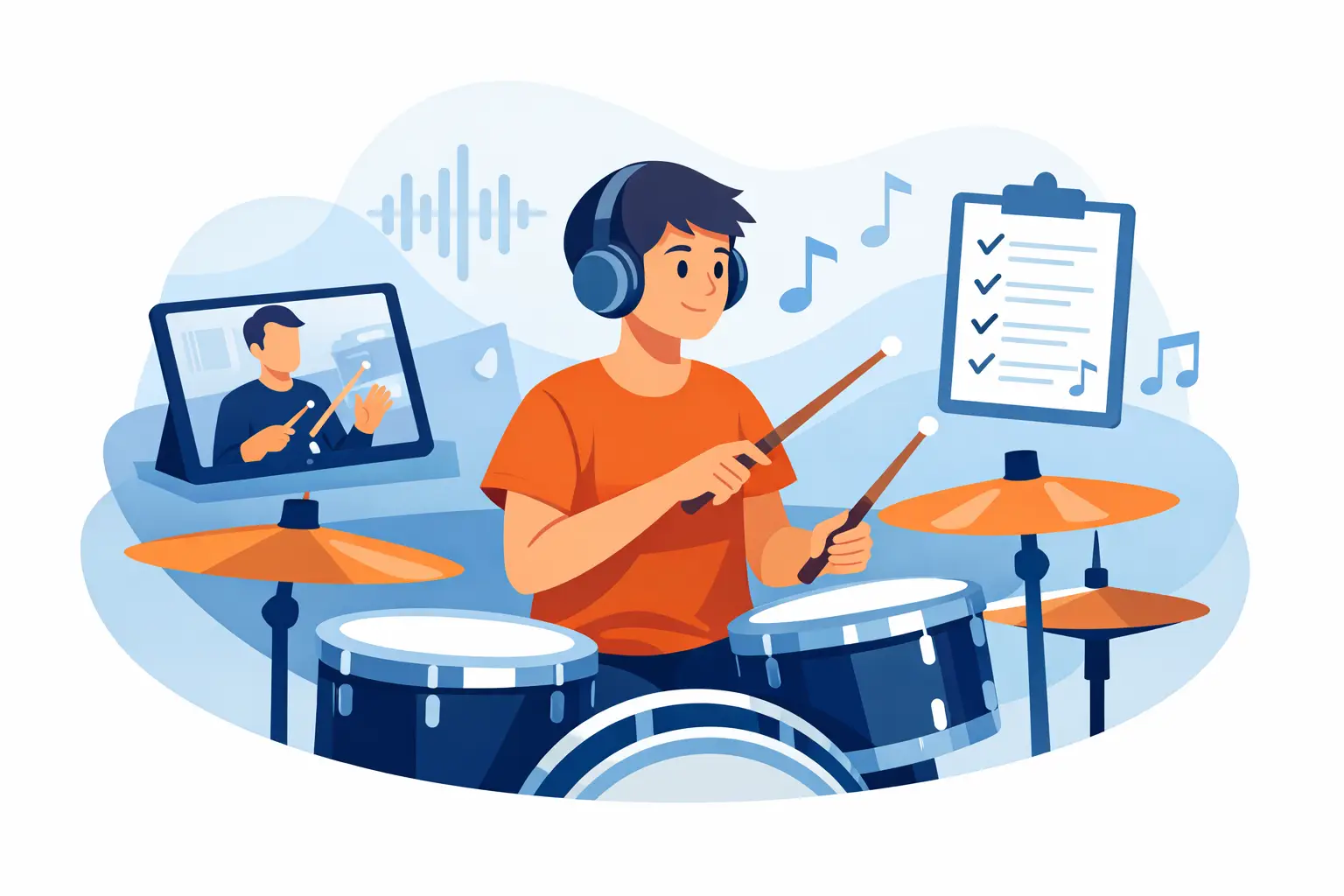
A first drum lesson should not feel like a test. It should feel like the moment a favorite song stops being something you only listen to and starts becoming something you can play. That is how beginners start drum lessons best: with a clear plan, a patient instructor, and early wins that make them excited to come back next week.
For a child, that might mean learning a steady beat they can show their family after one lesson. For a teen, it may mean playing along with a rock groove. For an adult, it can be the long-awaited chance to finally sit behind a kit without feeling embarrassed about being new. Every starting point is valid, and a good lesson plan meets the student there.
Start With Goals, Not Pressure
Before choosing sticks or worrying about complicated fills, decide what success would look like for the first few months. Some students want to join a band. Some want a creative activity after school. Others want to play songs at home, build confidence, or return to music after years away.
Those goals shape the lessons. A student who loves pop-punk may be motivated by a different groove than someone who wants to play jazz, worship music, hip-hop, or classic rock. Beginners do need fundamentals, but fundamentals become much more meaningful when they connect to music the student actually enjoys.
A caring teacher will ask about favorite artists, current experience, learning style, and the kind of musical moments a student hopes to have. That conversation removes a lot of the mystery. Drum lessons are not about keeping up with someone else. They are about making steady, personal progress.
How Beginners Start Drum Lessons: The First Skills
The first lessons usually focus on a small group of skills that work together: posture, stick control, rhythm, coordination, and listening. It sounds like a lot, but it is taught one piece at a time.
Students learn how to hold the sticks in a relaxed, controlled way and how to sit at the drum set so their arms and legs can move comfortably. This matters because tension makes playing harder than it needs to be. Good technique helps beginners create a better sound while protecting their hands, wrists, and shoulders as they grow.
Next comes the heartbeat of drumming: keeping a steady pulse. A beginner might tap quarter notes, count out loud, or play a simple pattern with a metronome. At first, keeping time can feel surprisingly challenging. That is completely normal. Rhythm is a skill, not a personality trait, and it gets stronger through regular, encouraging practice.
Then the drum set starts to come alive. Many students begin with a basic beat using the hi-hat, snare drum, and bass drum. A simple groove can support hundreds of songs. Playing that groove along with music is often the moment beginners realize, "I can really do this."
Reading Music Helps, But It Is Not the Whole Story
Basic drum notation gives students a useful map. They learn what the notes mean, where they land in the measure, and how to count rhythms with confidence. Reading can make it easier to learn new songs, communicate with other musicians, and track progress over time.
Still, great drum lessons are not just worksheets on a stand. Students also learn by listening, copying, moving, and playing with real music. Some beginners connect quickly with notation, while others need more hands-on repetition before the page makes sense. The right approach depends on the learner.
You Do Not Need a Full Drum Set to Begin
Many new families assume they must buy an expensive acoustic drum kit before the first lesson. Usually, that is not necessary. In fact, starting with a pair of sticks and a practice pad is often a smart choice. A pad is quieter, more affordable, and perfect for developing stick control, rhythm, and practice habits.
An electronic drum kit can be a great fit for homes that need volume control, especially when headphones are part of the setup. An acoustic kit offers a full, physical playing experience and may be the right choice for students who have room to play and a family ready for the sound level. Neither option makes someone a better drummer overnight. Consistent practice and good instruction matter far more.
A teacher can help families avoid buying the wrong gear too soon. There is no prize for owning the biggest kit on the block. Start with what supports the student now, then add equipment as their interests and skills grow.
What Practice Looks Like for a New Drummer
Beginners do not need marathon practice sessions. Short, focused practice is more useful than trying to cram everything into one long session on Sunday night. For many students, 10 to 20 minutes most days is a strong beginning, especially when each session has one clear goal.
A productive practice routine might include a few minutes of warmups, a rhythm-reading exercise, and time spent on a beat or song from the lesson. Younger students often do best when a parent helps establish a predictable practice time. Adults may need to protect a small block of time before work, after dinner, or on a quieter weekend morning.
The goal is not perfection. The goal is returning to the instrument often enough that the hands, feet, and ears begin working together naturally. Missed a day? No problem. Pick up the sticks tomorrow. A supportive music program teaches students to keep going rather than feel discouraged.
The Right Teacher Makes a Big Difference
Drums are energetic, physical, and wonderfully loud. They also require coordination that can be frustrating when a beginner is trying to make four limbs cooperate at once. The best instructor knows how to break a challenge into achievable steps, celebrate what is working, and keep the atmosphere fun.
For children, the right teacher builds trust while setting clear expectations. For teens, they offer a place to explore musical identity and play songs that feel exciting. For adults, they create a judgment-free space where it is safe to be a beginner. In every case, students need an instructor who listens as well as teaches.
Private lessons offer the most personalized path because instruction can move at the student's pace. Semi-private lessons can be motivating for friends or siblings who enjoy learning together. Band classes, jam sessions, and group events add another valuable piece: students discover how their part fits with other musicians.
At Matt Burk Music Studio, students can grow from their first beat into performance experiences, band settings, and a community that cheers them on. That bigger picture gives practice a purpose. A drum groove is not just an exercise when it becomes the foundation of a song played with others.
Performance Builds a Different Kind of Confidence
Not every beginner dreams of being onstage right away, and nobody should be pushed before they are ready. But having a future performance goal can be powerful. It gives students a reason to polish a song, learn to recover from a mistake, and feel proud of progress they earned.
Performance opportunities also teach an important truth: musicians do not have to be flawless to be compelling. A drummer who keeps the beat, listens to the band, and plays with joy brings something valuable to the room. Small recitals, open mic nights, and band showcases can help students build that confidence one experience at a time.
For parents, these moments are often where the growth becomes visible. The student who once hesitated to tap a beat may now walk onstage with sticks in hand, ready to contribute. That confidence often reaches beyond music into school, friendships, and everyday life.
Make the First Step Easy
The best time to begin is not after a student has the perfect gear, perfect schedule, or perfect confidence. Those things tend to develop after lessons begin. A free trial lesson can give a child, teen, or adult a low-pressure way to meet an instructor, try the drums, ask questions, and see what learning feels like.
Come curious. Bring favorite songs, a willingness to count out loud, and permission to be new at something. The first beat may be simple, but it can become the start of a musical life filled with creativity, friendship, and the confidence to share your gifts with the world.