
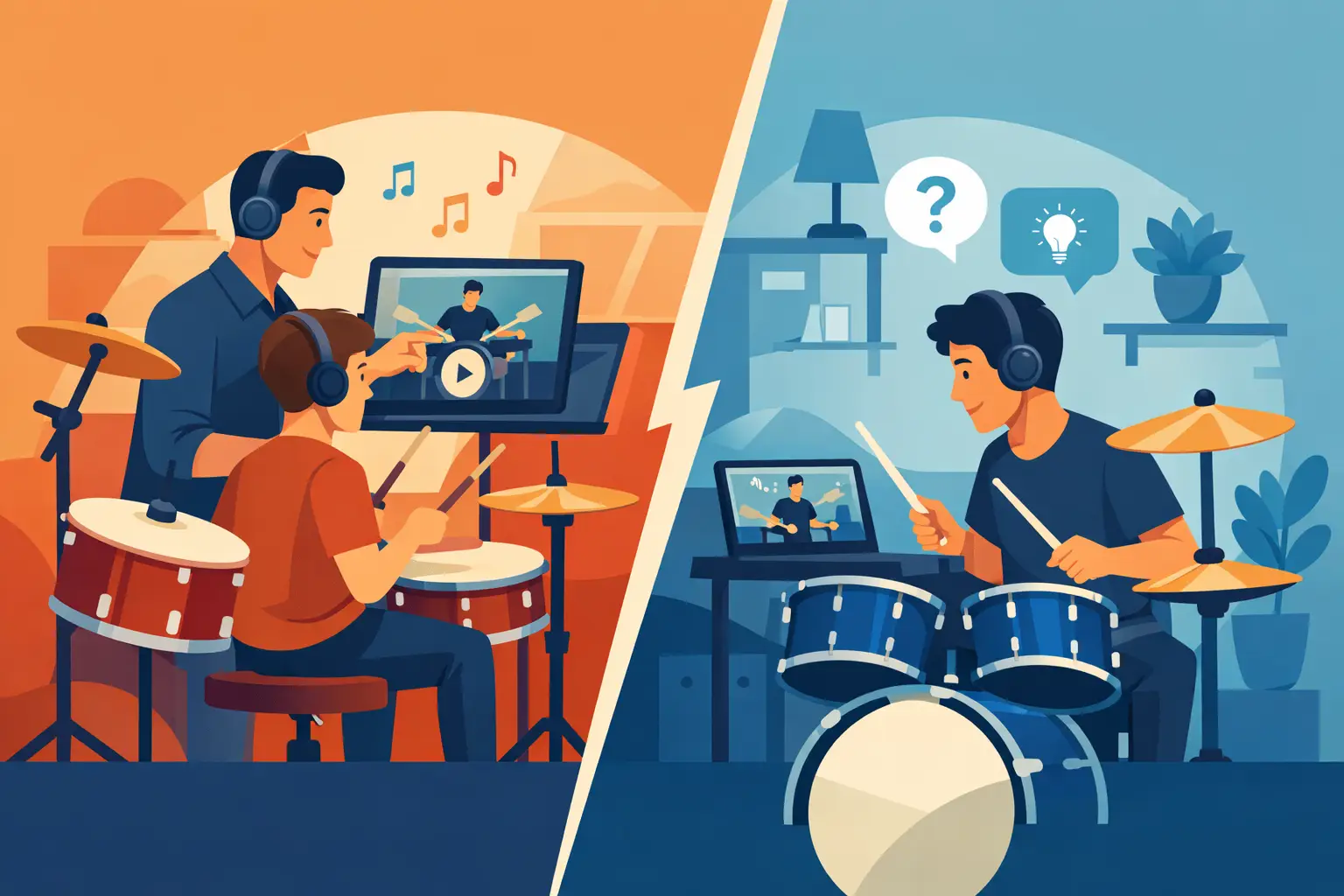
A first drum beat can feel like a huge win. Then comes the next question: how does a new drummer turn that excitement into real progress? When families weigh drum lessons versus self teaching, they are usually looking for more than a way to learn songs. They want confidence, good habits, steady growth, and a musical experience their child or teen will actually enjoy.
Both paths can work. The better choice depends on the drummer’s personality, goals, schedule, and need for guidance. For many beginners, the biggest difference is not talent. It is having the right support at the moments when learning gets frustrating.
Drum Lessons Versus Self Teaching: The Real Difference
Self teaching gives a drummer freedom. There are thousands of videos, play-along tracks, apps, and tutorials available at any hour. A motivated student can learn a favorite beat quickly, experiment with fills, and explore music that feels exciting. For an adult hobbyist with a clear goal and strong self-discipline, this can be a satisfying way to begin.
The challenge is that beginning drums are more physical and technical than they look. A student may be able to copy a groove while still gripping sticks too tightly, sitting at the wrong height, rushing the beat, or using a motion that causes unnecessary strain. Those habits can become harder to change after months of repetition.
Private drum lessons add an experienced set of ears and eyes from day one. Instead of simply asking, “Can I play this beat?” a student gets help with questions such as, “Why does this fill fall apart when I speed up?” or “How do I keep my hi-hat steady while adding the bass drum?” That feedback helps students make progress without guessing.
A great instructor also adjusts the lesson to the student. One drummer may need a fun rock song to stay motivated. Another may love reading rhythms, building technique, or preparing for a school band audition. Personalized instruction creates a path that fits the student instead of forcing every student into the same plan.
What Self Teaching Does Well
Self teaching is not a lesser option. It can build independence, curiosity, and the habit of exploring music outside of a lesson. Students who search for songs, listen closely, and try new ideas often develop strong musical instincts.
It can also be a great supplement to lessons. A drummer who learns a favorite song from a video may bring it to a teacher and discover how to play it with cleaner timing, better sticking, and more confidence. The student still gets to follow their interests, while the instructor helps turn inspiration into a usable skill.
Self teaching tends to work best when a learner has a specific, realistic goal and can follow a practice routine without much outside accountability. For example, an adult who wants to learn a handful of worship, classic rock, or pop songs may make meaningful progress with online resources and regular practice.
But online content does not know the student. It cannot hear whether their backbeat is dragging, notice that their left hand is struggling, or encourage them after a difficult week. Videos offer information. They do not always offer a plan.
Why Drum Lessons Create Faster, Healthier Progress
Drum lessons give beginners a sequence. Students learn how to set up the kit, hold the sticks, count rhythms, keep time, coordinate their limbs, and play music in a way that builds naturally from one skill to the next. That structure prevents the common cycle of learning a few exciting beats, hitting a wall, and deciding they are “not musical.”
Timing is one of the clearest examples. A student can play along with a loud recording and feel like they are right on the beat. When the music stops, the pulse may disappear. A drum teacher can use counting, metronome work, listening exercises, and song-based practice to help the student develop a reliable internal clock.
Lessons also make practice more productive. Beginners do not need hour-long practice sessions to improve. They need to know what to practice and how to recognize a win. A teacher can assign a short groove, one fill, and a simple listening goal that fits into a busy family schedule. That makes progress feel possible rather than overwhelming.
For parents, lessons offer helpful clarity. Instead of wondering whether a child is truly advancing or simply watching videos, families can see milestones: a new song, stronger rhythm reading, better coordination, a successful jam session, or the confidence to play for others.
Performance Changes the Goal
A drummer can learn alone for years and still feel nervous playing with other people. Playing in time with a band requires listening, reacting, leaving space, and recovering when something goes wrong. Those are skills that grow through real musical experiences.
This is where a community-focused lesson program can make a meaningful difference. At Matt Burk Music Studio, students can build beyond the weekly lesson through band experiences, jam sessions, open mic opportunities, and performances at respected local venues. A young drummer learns that practice is not just about getting a sticker or checking off an assignment. It is preparation for sharing music with people.
Performance opportunities are not only for advanced students. A beginner may start by playing one simple groove with a group. That small success can be a powerful confidence boost. Over time, students learn how to count in a song, follow a bandleader, stay calm after a mistake, and enjoy being part of a team.
The Cost Question Is More Than Tuition
Self teaching can seem free, especially at the start. Yet many students spend money on subscriptions, books, drum accessories, and random courses that do not connect. The bigger cost can be lost time. Without feedback, a drummer may practice the same mistake repeatedly or quit just before they would have started to gain momentum.
Drum lessons are an investment, but the value comes from direction and consistency. A skilled teacher helps students avoid bad habits, set achievable goals, and get more out of the practice time they already have. Flexible scheduling and the ability to reschedule can also matter a great deal for busy Allen and Frisco families.
That does not mean every student needs years of intensive instruction. Some students benefit from lessons for a season, then become more independent. Others thrive with ongoing coaching as their musical goals become bigger. The right approach can change as the drummer grows.
How to Choose the Best Path for Your Drummer
Start by looking at what happens after the first burst of excitement. Does your child keep practicing when a groove gets hard? Can they tell when they are off beat? Do they enjoy learning from videos but need help staying focused? Are they hoping to play in a school band, with friends, at church, or on a stage someday?
If the student is highly independent and only wants to explore casually, self teaching may be enough for now. Keep the setup simple, protect their hearing, and encourage them to play along with music they love.
If they need encouragement, clear goals, accountability, or help building a strong foundation, lessons are usually the more rewarding route. The same is true for students who want to perform, join a band, improve quickly, or avoid the frustration of trying to solve every problem alone.
A free trial lesson can be a low-pressure way to find out. The student gets to sit behind the kit, meet a kind instructor, play something right away, and see whether guided learning feels fun. Parents get a clearer sense of the teacher’s approach and how a personalized plan might fit their family.
The best first step is the one that keeps music joyful and moving forward. Give your drummer a chance to make noise, make mistakes, celebrate small victories, and discover what they can do with the right encouragement.