
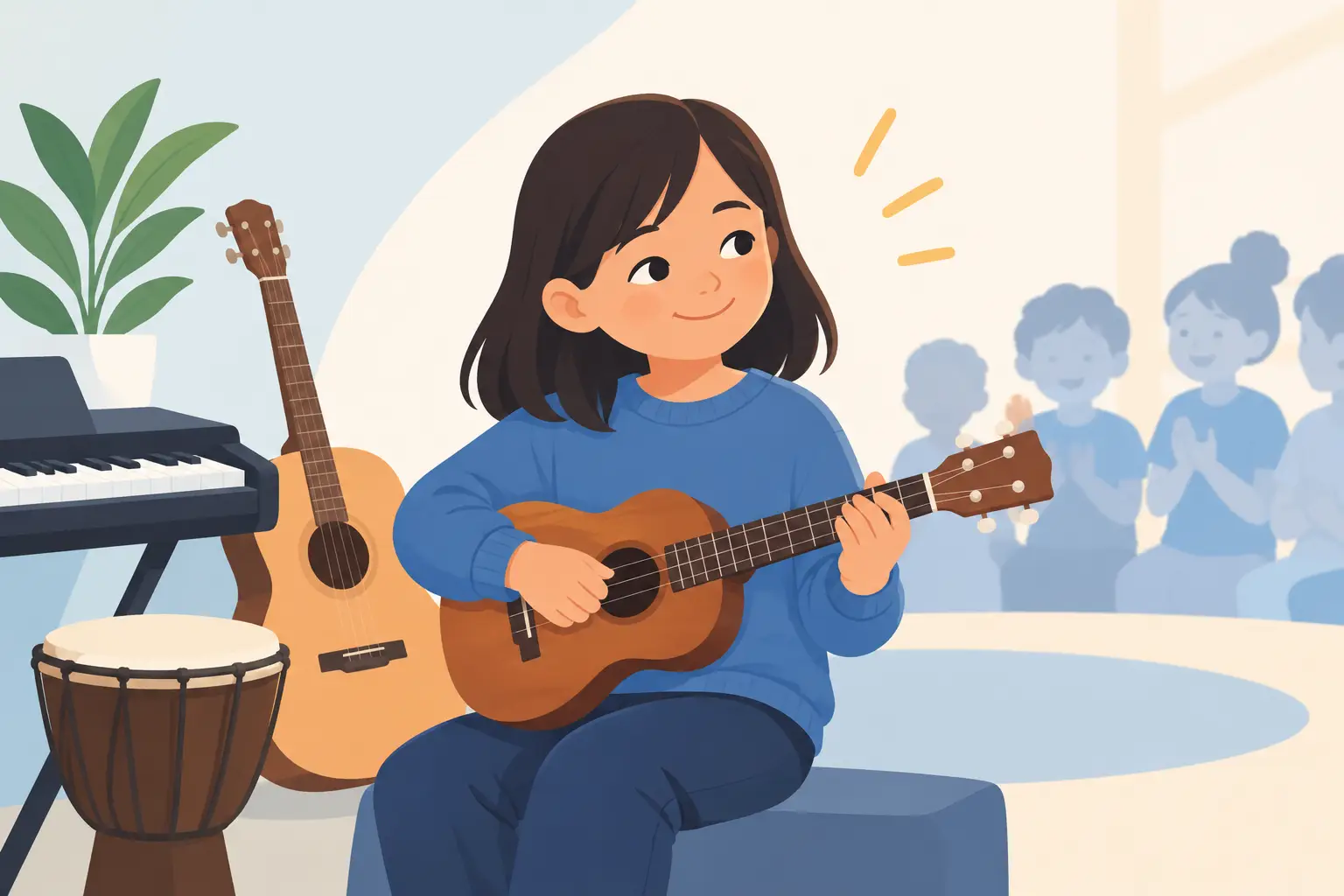
A shy child does not need to become the loudest person in the room to become a wonderful musician. Sometimes confidence starts with a few quiet minutes at a piano, the satisfying beat of a drum, or a favorite song played with a kind teacher nearby. The best instruments for shy kids are the ones that give them a comfortable way to express themselves, make progress at their own pace, and feel proud of what they can do.
For parents, the goal is not to choose the instrument that seems most impressive. It is to find one your child is excited to return to each week. When lessons feel safe, fun, and personal, even a reserved student can begin taking healthy creative risks, sharing ideas, and eventually stepping into performances when they are ready.
Why the Right Instrument Can Build Confidence
Shyness is not a problem to fix. Many thoughtful, observant children simply need a little more time before they feel comfortable speaking up or trying something new in front of others. Music gives them a different language. They can communicate feeling through rhythm, melody, dynamics, and the songs they choose without having to explain every emotion out loud.
The right instrument also creates early wins. A child who can play a recognizable melody, hold down a drum beat, or sing the chorus of a favorite song has proof that practice pays off. Those small victories matter. They build confidence that often carries into school, friendships, and other activities.
Personality is only one piece of the choice. Age, hand size, musical taste, attention span, home practice space, and budget all matter, too. A shy child may love an energetic instrument, and an outgoing child may prefer quiet piano practice. Let curiosity lead the decision.
Best Instruments for Shy Kids
Piano: A Comfortable Place to Start
Piano is often a wonderful first instrument for shy children because it makes sense quickly. The keys are laid out visually, and a beginner can play simple melodies and chords early on. There is no need to worry about finger pain, embouchure, or producing a tone before making music.
It is also naturally flexible. A student can play softly, practice independently, accompany themselves, or eventually join a band. At first, piano lessons can feel like a calm one-on-one conversation with music at the center. As confidence grows, students can explore songwriting, improvising, and performing songs they truly enjoy.
Ukulele: Small, Friendly, and Fast to Learn
A ukulele can feel much less intimidating than a full-size guitar. Its smaller body is easier for many young hands to hold, its four strings are simple to understand, and a few basic chords can open the door to lots of familiar songs.
For a shy child, that quick progress can be a big motivator. They can strum along to a favorite tune without feeling overwhelmed by too many technical details. Ukulele also works beautifully as a social instrument later on, whether that means playing with a sibling, joining a class, or participating in a casual jam session.
Guitar: Great for Children Who Connect With Songs
Guitar is a strong choice for kids who light up when they hear pop, rock, country, or singer-songwriter music. It gives students a way to play the songs they already love, which can make practice feel more personal and less like another assignment.
The early stage does require patience. Pressing strings can be uncomfortable at first, and changing chords takes coordination. Still, a patient instructor can break those skills into manageable steps. For a shy student who wants to contribute without being the center of attention, guitar can eventually become a rewarding role in a group or band.
Drums: A Healthy Outlet for Big Feelings
Quiet children can have big feelings. Drums give those feelings a positive, structured outlet. A student does not have to talk much to communicate through a solid groove, a powerful fill, or a change in volume.
Drums are especially appealing for kids who are physically active or have a hard time sitting still for long stretches. They build coordination, listening skills, and focus while giving children permission to make some noise. The trade-off is practical: families need to consider practice space and sound levels. An electronic drum kit or practice pad can make home practice more manageable.
Voice: For the Child With Something to Say
Voice lessons can be deeply confidence-building, but they are not always the easiest first choice for a very shy child. Singing feels personal because the instrument is part of the student. Some children love that connection right away; others need time before they are ready to sing in front of anyone.
A supportive voice teacher does not push a child into a spotlight too soon. Lessons can begin with breathing, simple exercises, favorite songs, and singing alongside the instructor. Over time, voice students often discover that their sound deserves space. The first time a reserved child sings a full song with confidence can be a powerful moment.
Bass: A Steady Role in a Band
Bass is an excellent option for kids who like music with a strong beat and enjoy supporting the bigger picture. Bass players help hold a band together, connecting the rhythm of the drums with the harmony of the guitars and keyboards.
That role can be especially comfortable for a shy student. They are essential to the sound without always carrying the main melody or standing at the front. Bass also gives students a natural pathway into ensemble playing, where connection grows through shared music rather than forced conversation.
How to Choose an Instrument Without Adding Pressure
Start by paying attention to what your child already notices. Do they tap along to drums in the car? Watch a pianist's hands? Sing every word to a favorite song? Their natural interest is more valuable than a parent’s guess about which instrument will be easiest.
Then give them a low-pressure chance to try. A first lesson should feel like an invitation, not a test. A skilled teacher can introduce basic sounds, rhythms, and techniques while watching what makes the student smile, concentrate, or ask questions. It is completely okay if the first instrument is not the forever instrument. Trying piano and later moving to guitar is progress, not failure.
Be careful not to frame music as a confidence project your child must complete. Instead of saying, “This will make you less shy,” try, “Let’s find something you might enjoy.” Children usually grow more confident when they feel accepted as they are.
The Teaching Environment Matters as Much as the Instrument
Even the perfect instrument can feel intimidating in the wrong setting. Shy kids tend to thrive with instructors who listen carefully, celebrate effort, and set clear, reachable goals. They need enough structure to know what comes next and enough freedom to bring their personality into the lesson.
Private lessons are often a comfortable starting point because students receive focused attention without an audience. Later, a semi-private class, jam session, open mic, or band experience can offer a gentle next step. The best performance opportunities are not about throwing a child onstage before they are ready. They are about creating milestones that feel exciting, supported, and achievable.
At Matt Burk Music Studio, students can build from a first note in a personalized lesson to sharing music in encouraging community settings. That progression helps children see performance as a celebration of growth, not a scary test.
Your child does not have to be fearless to begin. They only need an instrument that sparks interest, a teacher who meets them with patience, and room to grow one small musical win at a time.